by Bel | Nov 19, 2014 | acting classes, acting classes london, audition classes, audition doctor, auditions, classes for acting, tilly blackwood
 Maya Angelou said: “I’ve learned that people will forget what you said, people will forget what you did, but people will never forget how you made them feel.” It appears to be this sentiment that has been the driving force behind the the Guardian and the Royal Court’s decision to co-release a series of online state-of-the-nation microplays. The coupling of journalism and theatre is a move to humanise the statistics that are routinely quoted but rarely truly comprehended in articles.
The first microplay explores the neglectful and seemingly merciless attitude of the coalition government towards food poverty, with Katherine Parkinson playing out Edwina Currie’s unforgiving sentiments earlier this year. The feeling that you experience at the end of the play will linger far longer than reading the fact that “food prices have soared by 43.5% in the past eight years while the disposable annual income of the poorest 20% fell by an average of £936 over the same period.” The numbers are shocking, however, they are forgettable when compared to excruciatingly watching Parkinson trying to make a substantial meal out of a can of tomato soup, a tin of fish and no electricity.
Director Carrie Cracknell wrote: “Why is it more useful for it to be a drama than a well-researched, well-written article? As my work develops, I am increasingly interested in the ways in which stories can open out and shine light on our day-to-day realities and perhaps this way hit you in the heart as well as the mind.”
Meanwhile, at the National Theatre, Meera Syal will be appearing in the forthcoming production of Behind the Beautiful Forevers, which depicts the appalling reality of living in a Mumbai slum. Echoing Cracknell in an interview for the Telegraph, Syal agreed that “powerful storytelling has a better chance of thwacking people in the solar plexus. People are more likely to want to effect change if they are affected emotionally rather than intellectually. A good play can get to a part of you that a thousand political speeches might not.” Consequently, the actor has a huge responsibility – to not only make you feel but also inhabit a world that is so distant from your own.
Audition Doctor is where you learn to create such worlds organically and gradually. Both professional actors and applicants for drama school have found Audition Doctor sessions to have been indispensable. Tilly’s methods mean that any ego or self-consciousness that students feel are easily put aside in favour of telling the truth of the story.
Actors come to Audition Doctor for help with both stage and screen acting, recognising the need to be familiar with as many mediums as possible. Versatility has always been essential in order to make a living in the industry. The online microplay, which Cracknell describes as a “new adventure where theatre meets film in an inescapably theatrical setting”, will undoubtedly have its own unique demands. However, what remains constant is the actor’s commitment to be true and to be real. At Audition Doctor, all students give performances that cost them. This vulnerability and daringness to portray what it is to be fallibly human is what forces an audience to feel. Consequently, students who come to Audition Doctor often end up unforgettable.
by Bel | Nov 12, 2014 | acting classes, acting classes london, audition classes, audition doctor, auditions, classes for acting
 Preparation is the primary reason why both professional actors and drama school applicants come to Audition Doctor. Preparation is also the topic that journalists love to question actors about. Many avoid discussing how they prepare for a part with one interview with Olivia Colman stating: “Colman doesn’t like talking about acting. She bats away my questions awkwardly with comments like, “It’s not very technical” or “I just pretend I’m in that situation”. It’s as if she finds the conversation pretentious and embarrassing.” However much actors avoid talking about preparing, there is never any denial over its importance in the successful creation of a role. With talk by actors such as Judi Dench about the decline of repertory theatre, places such as Audition Doctor have become alternative yet integral spaces in which to rehearse, prepare, fail, and as the Beckett saying goes, fail better.
Aside from professional actors, a significant proportion of Audition Doctor’s students are those applying for drama school. BBC News this week ran an article that discussed the importance of such establishments in a performer’s development: “One element is not disputed: winning a place at drama school is key. That is where you gain experience, find an agent and make industry contacts. But the competition for places is fierce.” The article went onto examine how attending classes before auditions for drama school, such as those offered at Audition Doctor, often gave students an undeniable edge.
In response to the question “Do lessons stand you in good stead in an application for drama schools like Central, Rada and Lamda? Florence Hall, a student representative on the audition panel at Drama Centre replied: ”It’s not that they wouldn’t consider someone who hadn’t had any experience before, if they came in and clearly had raw talent, but you do have to look like you’re going to be able to respond to training which I think doing classes helps you to do. You learn to not be embarrassed to try things out.”
The cause of Audition Doctor’s students’ success in auditions lies in the judgement-free atmosphere that Tilly fosters. Consequently, this results in an unselfconscious and authentic performance. However, the students that get parts and places at drama school are those who prepare for Audition Doctor sessions themselves. The more preparation that is done outside of the session means that there is more to experiment and play around with.
Speaking of preparing for her recent role as P. L. Travers on the BAFTA website, Emma Thompson said: “There was so much information on this woman so I ingested as much information as I could over a period of six months; listened to everything, watched everything, read everything, then the trick is to let go of all of that information because you’ve got to trick your psyche into thinking that it’s someone else and you can’t do that by being conscious of being that person. So it’s a very odd magic trick. It’s more like a magician’s trick than anything else.”
The reason why actors are sometimes unwilling to speak of the preparation involved in forming a character is undoubtedly because there is some involvement of inarticulable alchemy that Thompson speaks of, and any effort to explain it may come across affected and pompous. However, many find that it is often at Audition Doctor that this is experienced, which is why students find Audition Doctor an incalculable investment.

by Bel | Nov 4, 2014 | acting classes, acting classes london, audition classes, audition doctor, auditions, classes for acting, tilly blackwood, Training
 At the Cheltenham Literary Festival, The Times reported Judi Dench disagreeing with the commonplace practice of understudies playing the roles of leading stage actors in matinees. She credited her training at drama school as the thing that equipped her with the stamina: “That doesn’t faze me at all – eight performances a week, I know it’s rather fashionable now to get someone else to do two performances but that’s not the way I was trained.”
However, she also recently mentioned the difficulty for actors without significant private backing to receive professional training. Earlier this year, The Times carried out research in which “a study of 100 British actors to have been nominated for Bafta or Olivier awards in the past decade showed that state-educated actors outnumbered their privately schooled peers until 1957, when the trend reversed. Even before that turning point, products of a state education were still at a disadvantage as they represent more than 93 per cent of the population.”
With drama schools now charging £9,000 in fees and complaints about the dearth of working-class stories portrayed on television, acting is understandably seen as being a profession monopolised by the wealthy. Furthermore, Dench lamented the fact that “there aren’t [repertory theatres] where you get to learn about how other actors do it. Where do you go to learn, and to make mistakes?” The disintegration of the repertory system has meant that drama school has increased in importance as a space where young actors can learn and make mistakes.
Dench went onto warn that “it [is wrong to assume that good actors will rise to the top. It doesn’t hold that the actors who are good actors are in the jobs. It’s if you’re lucky, you’ve got the job”, reinforcing the idea that getting a place at drama school has become even more important.
However, as Jake Gyllenhaal said on the On Acting blog of the Bafta website: “Education is essential…it doesn’t mean you have to go out and get it from an institution but educating yourself is the most important thing, otherwise you’re making blind choices that you’re not sure about.”
Audition Doctor has become an alternative place for both professional and aspiring actors to educate themselves with professional guidance. Gyllenhaal stated that what he looked for in a role wasn’t “about a genre or even about a specific character, it’s if I feel that there’s an honesty and a sort of beating heart that exists underneath the material…it’s the honesty and truth between characters.”
It is this that Audition Doctor focuses on: the creation of a truthful and three-dimensional human being. Audition Doctor’s students come regularly because unlocking the beating heart that is underneath the material that Gyllenhaal speaks of, takes time and a commitment to both failure and experimentation.
Furthermore, Audition Doctor students understand what Gyllenhaal means when he said: “For a long time I was looking for a sense of resolution at the end of a movie or a scene, feeling like as Chris Cooper said to me once “Never having regrets”, but that’s impossible, there is no resolve. You never fully get there and it’s a constant search.”
by Bel | Oct 29, 2014 | acting classes, acting classes london, audition classes, audition doctor, auditions, classes for acting, tilly blackwood
 Ideastap recently published an article by Denis Lawson where he explored the false perception that an actor has to “perform” or “act” in order to affect an audience. He mentioned the instance when Billy Wilder was directing Jack Lemmon: “There was a particular take that Wilder had Lemmon do over and over again. “Too much,” Wilder would say, “Do it again.” Finally, Wilder said, “That’s it.” Lemmon replied, “But I’m not doing anything!” “Exactly,” said Wilder.
This is something that Audition Doctor focuses on; the ridding of the extraneous theatrics that get in the way of an honest portrayal of a character. Both professional actors and drama school candidates come to Audition Doctor to find a way of using both the words as well as themselves to create a fully fleshed human being. Audition Doctor’s success rate is high because in encouraging her students to play to their inherent unique strengths, what is shown to an audition panel is less of a “performance” and a more natural and unstilted rendering.
Textual analysis is essential, however, it is often seen as a way of creating a character by the building up of information from the writing layer by layer. Conversely, Lawson argues that the words should prompt the peeling away of layers and it is the act of stripping back which makes for an authentic performance.
Lawson says that while “it’s part of an actor’s equipment to be able to transform ourselves from part to part. Changing our appearance, altering our movement, our body language. But what can be equally challenging is nothing: just to be you. To have the confidence to work in front of an audience or in front of a camera and not do but be: peel back the layers to reveal yourself, and, through the sheer force of your concentration, to take the audience on a journey while appearing to be doing nothing. That takes nerve and confidence. The camera certainly loves it, but take that ability back on to the stage and it can be very powerful. I certainly feel now that if I’m straining and pushing for something, it’s wrong.”
Audition Doctor sessions encourage you to realise that less is more. However, this doesn’t mean that less work is done on the text. The confidence that results from intense textual exploration means that your performance can be informed and nuanced without having to resort to the artificiality that comes from “acting”.
Audition Doctor continues to be in high demand because aside from the practicalities of preparing for an audition, such as working on language and exploring a character’s intentions, Tilly encourages each of her students to realise what Lawson failed to realise early on in his career – that “the most potent weapon we have at our disposal as actors is ourselves.”
by Bel | Oct 21, 2014 | acting classes, acting classes london, audition classes, audition doctor, auditions, classes for acting, tilly blackwood
 Harriet Walter wrote of her experience in The Guardian of preparing for the male role of King Henry in the upcoming all-female Donmar production of Henry IV.
“People ask us whether we have to do a lot of research or do different things to get into a male character. The answer is: not really. The actor’s job is to get behind the needs of their character that give rise to what they say and do…Shakespeare has done most of the work and my task is to lift his words and thoughts off the page. It is part of an actor’s equipment to be able to imagine life in a mind and body other than their own.”
Although Walter acknowledges that “Shakespeare is tantalising…, he gives us the most wonderful words to say, the most dramatic situations to re-create”, the task of crafting a believable human being out of Elizabethan language for a modern audience is difficult.
Aside from professional actors, drama school applicants make up an equally significant proportion of Audition Doctor’s student body. The majority of accredited drama schools require people auditioning to perform a speech from a Shakespeare play. Some schools, such as the Central School of Speech and Drama, provide those auditioning with a set list of Shakespeare speeches. The panel will be seeing thousands of Juliets, Portias, Hamlets and Macbeths. Due to the fact that the list of monologues that applicants can choose from is limited, the need to distinguish yourself from the masses is even more paramount. The reason why Audition Doctor is in high demand is because the work undertaken with Tilly is so tailored to you, that the interpretation you take to the audition is by nature original and specific.
Walter says of acting Shakespeare characters: “We have to stretch wider and higher and dig deeper than our standard selves in order to reach those words and those situations.”
Audition Doctor’s popularity is also due to the fact that actors recognise the difficulties of exploring characters alone. An Audition Doctor session affords students a structured and concentrated time to do precisely what Walters says – to go beyond your standard self. The openness and supportive nature of the sessions mean that experimentation with the text is only ever encouraged and never prejudged. Consequently, the resulting interpretation of your character is always a unique creation that is simultaneously supported by the text.
Kristin Scott Thomas mentioned in The Telegraph how exhilarating it was to work in theatre again: ““In films, they can edit and cut you; on stage, you have complete control. Ian [Rickson] gives me instructions and we work through stuff together but if I turn up at the opening night and decide I can do the whole thing standing on my head, no one can stop me,” says Scott Thomas. “There’s something incredibly exciting and dangerous about that.”
Similarly, Tilly gives her students direction and suggestions. Ultimately, however, it is the freedom and confidence to make your own artistic choices that characterises Audition Doctor sessions and why Tilly’s students often land the jobs and drama schools they audition for.

by Bel | Oct 15, 2014 | acting classes, acting classes london, audition classes, audition doctor, auditions, classes for acting, tilly blackwood
 This week, Ideastap uploaded a video of the Associate Director of the National Theatre, Anna Niland, giving advice on how to audition. The first thing that she mentioned was the importance of picking the right monologue. As an actor, the nature of the job often renders you passive; you are the one waiting to be chosen, whether by an agent or a director, as opposed to the one making active choices. However, the choice of an audition speech is one of the few instances where you can exercise complete control.
Niland said: “Don’t just go to the female monologue book or the male monologue book because that’s what a lot of people will do and that’s not particularly interesting. Go to the theatre, watch new plays, think really carefully about the kind of character that you want to play and also the kind of work that you want to be seen in. That’s why the speech you choose says so much about you and about your knowledge of the theatre.”
In The Telegraph, Jack Lowden, who is appearing in Electra, discussed how he envied dancers because they can practise: “You can’t really do that with acting, apart from working on your voice.” Audition Doctor is one of the few places where practicing is possible, which is why Audition Doctor is equally popular with professional actors who have been to drama school and those applying.
Audition Doctor’s high success rate can be attributed to the fact that students understand that preparation requires time and patience. Audition Doctor’s students usually come on a regular basis because they recognise the veracity of Niland’s statement: “The more you prepare, the more you will be able to walk into the [audition] room and bring that world with you.” Audition Doctor is about truthfully creating the world that your character inhabits while simultaneously being open to suggestion, experimentation and redirection.
Niland encourages actors to “be flexible, [audition panels and directors] want to see whether you’ve rehearsed it so hard one way that there is no other way you can do it. Most drama schools and directors are looking for actors who can throw stuff out the window and try something fresh…and be able to to do something new with that character.”
Niland says: “It’s really important that you watch things, so that could be watching the telly, watching a play at the theatre, watching a film, watching people. It’s only going to make you more employable, more interesting than the next person coming into the room who hasn’t been to the theatre in three years. If you want to do it, immerse yourself in it.”
True immersion comes from not only watching others act but also doing it yourself. Lara Pulver, who was recently in Sherlock, says in The Telegraph that “acting is all about making good choices” and as all Tilly’s students can attest, coming to Audition Doctor is one of them.

by Bel | Sep 18, 2014 | acting classes, acting classes london, audition classes, audition doctor, auditions, classes for acting, help with auditions, tilly blackwood, Training
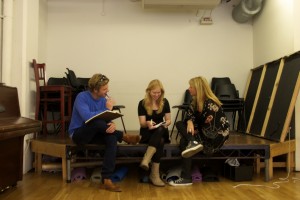 Speaking of the rehearsal process and the nature of being part of a company, Simon Russell Beale commented: “I personally would be unable to develop a part by myself at home…I need the stimulation of other people.”
One of the reasons for Audition Doctor’s popularity is the need for professional actors and drama school applicants to have a professional sounding board when creating a character. Especially as the drama school audition process is protracted one, rehearsing monologues countless times at home is unsurprisingly not conducive to preserving the vitality and originality that perhaps you had at the beginning.
In an interview on The National Theatre’s website, Nick Hytner said: “Good actors can’t learn their lines unless they know why they’re saying them and you can take an infinite amount of time finding out why you have to say the lines that are written for you. The best acting gives the impression of being spontaneous. In order to be spontaneous every night, you have to feel like the words you say are the only response to the situation you find yourself in…Rehearsals are the process of discovering those reasons.”
Audition Doctor sessions are the closest thing drama school applicants will have to rehearsals and the final recalls that students achieve are testament to the uninhibited freedom of expression that Tilly instils each of her students with. This quality is also why Audition Doctor is increasingly regarded as a necessity for professional actors preparing for jobs.
Judi Dench spoke out this week against the financial constraints placed on actors without significant private funding to pay for conservatoire training. She mentioned: “Anyone who’s in the theatre gets letters countless times a week asking for help to get through drama school. You can do so much, but you can’t do an endless thing. It is very expensive.”
The Guardian commented: “She accepts that talented aspiring actors can make it without going to drama school. “But it’s a hard and rocky road,” she added.”
The collapse of the repertory system – which Dench describes as “where you went to learn and make your mistakes and watch people who knew how to do it” – has meant that drama schools have become increasingly important for actors learning their craft.
Despite the increase in fees, the competition is no less fierce. The National Theatre website states: “Acting requires a wide range of skills, vocal, physical, imaginative, expressive, intellectual, intuitive, and work can demand different dialects, languages, accents, vocal control or body language, improvisation, observation and emulation, mime and often dancing or stage combat. A stage actor will often be required to research around a character or a period of history. In an ever changing world it is a continually evolving profession”. Students understand that the industry is a demanding one and that the skills taught at drama school are essential to survival and longevity as an artist.
Speaking of her imminent return to the London stage, Emma Thompson said that she was suffering from nerves and nausea but that she was adhering to the advice of the late choreographer Agnes de Mille: “You have to keep flinging yourself, leaping into the dark.” Whether you are preparing for a professional role or a drama school audition, Audition Doctor prepares you for that leap and makes it far less terrifying.
by Bel | Sep 11, 2014 | acting classes, acting classes london, audition classes, audition doctor, auditions, classes for acting, tilly blackwood
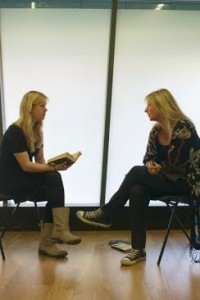
When asked the question “Why rehearse?”, Simon Russell Beale replied: “Very often we’re dealing with works of great complexity and great depth and I think its courteous to spend that amount of time figuring out what Shakespeare or Shaw wanted to do and that applies to new plays too. It’s a more complicated procedure than most people probably think. It’s not just a question of where you stand and getting the lines out in the right order. It has to be developed in a much more organic way than that and that’s what that time is spent doing. [An actor’s job] is to find the emotional and intellectual path through our various characters and our relationships and that actually requires quite a lot of delicate piecemeal work which takes time.”
The influx of students at Audition Doctor begins earlier every year which reflects both the conscientious nature of drama school applicants and the highly competitive nature of getting a place. Those who get further on in the process are often those who have taken advantage of all the chances offered to better their craft. This inevitably takes continual graft over a period of time and Audition Doctor is one such opportunity. It is rare in the sense that it is totally focused on you. Schemes such as those offered on Ideastap are almost always group lessons. They are undoubtedly brilliant, however, places are strictly limited and usually one-off which makes progress hard to gauge. Consistent lessons at Audition Doctor are an investment because students are able to see a clear upward trajectory in their development as an actor. The delicate piecemeal work that Russell Beale speaks of is difficult to do alone and Audition Doctor sessions give you the freedom to explore difficult texts with professional help.
The RSC’s Casting Director, Hannah Miller, was talking recently of giving 24 young and emerging actors the chance to learn the text, voice and movement exercises used by the RSC when approaching classical texts. Similar to Audition Doctor, she mentioned that the sessions were “not just teaching techniques for classical work. It’s about working with the words that have been written. The writer has done everything for a reason. You need to observe that, take clues, ask questions and deconstruct the text to find out what it means to you, given your understanding of that character. That is the just the same for a naturalistic piece of work written two years ago as it is for a classical text.”
The reason why many students come to Audition Doctor is due to the perceived difficulties they face when approaching a Shakespeare text – an unavoidable necessity for drama school auditions. Miller went onto say: “Of course, there are different challenges with classical texts. We might not actually know what those words mean. It is alien to the way that we speak and understand language.” Audition Doctor sessions instills confidence and removes the fear from Shakespeare which is invaluable in the actual audition when being redirected and asked to experiment with the language.
Miller stated that the RSC was looking for individuals “with an open mind. With creativity, truth in their performances and technique” and it is this that Audition Doctor equips each one of her students with prior to auditions.

by Bel | Sep 4, 2014 | acting classes, acting classes london, audition classes, audition doctor, auditions, classes for acting

In an interview about stage actors, Nicholas Hytner talked of the specific demands that theatre required of its practitioners: “Everyone thinks they know what actors do, they try truthfully to be other people or maybe they reveal parts of themselves through the act of pretending to be other people. But stage actors have particular demands made on them. They have to truthfully to include maybe a thousand people into a conversation and very often they have to make inevitable, natural and truthful texts of great complexity and beauty that are maybe five hundred years old. That requires vocal skills, physical skills but also mental and emotional skills.”
The advent of September means applications to drama school will soon be open. Although it may seem early to begin picking and rehearsing speeches, the oft-repeated advice that professional actors give to those starting out is to prepare.
Most students who come to Audition Doctor to prepare for auditions begin early on in the process. Sometimes applicants have a misplaced belief that leaving practicing their audition monologues till much later means their performance at the audition will be fresh and original.
Roger Allam countered this belief in an interview for the National Theatre: “I think repetition is one of the most important things about acting. I haven’t got much time for people who say “Oh it’s so boring doing these runs of plays” because in a sense, that’s what acting is. The French word for rehearsal is “répétition”. You have to repeat it to learn it and to learn how to do it.”
Hytner went onto say: “To make it feel as if these are the only things that can be said, thought or felt in the situation that has been portrayed on the stage and to make that felt over a span of two or three hours is actually a very very different job from simply, as it were, transmitting a realistic copy of human behaviour to a camera that may only be two or three feet away from you, making very few physical demands of you.”
A drama school audition is effectively a theatre performance. The reason why so many students come to Audition Doctor is that they know that they only have about 3 minutes to convey that they not only have the ability to truthfully embody the life and experience of another person, but also sustain it for the length of a play.
Aside from focusing on the emotional side of the character, Audition Doctor also ensures that students rid themselves of any physical awkwardness. Initially, students often don’t know where or how to stand, what to do with their hands and this can negatively affect the way a speech is performed.
Audition Doctor makes sure that you enter the audition room confident and ready. Hannah Miller, Casting Director at the RSC, said in an Ideastap interview: “You’re not gatecrashing an audition – you’ve been invited and have every right to be there, But it’s also up to you to do yourself justice. Do everything in your power to make sure you have no regrets at the end of that meeting.” Coming to Audition Doctor does precisely that.

by Bel | Sep 2, 2014 | acting classes, acting classes london, audition classes, audition doctor, auditions, classes for acting, tilly blackwood
Both Judi Dench and Helen McCrory have recently professed the importance of the continuation of training outside the confines of drama school.
In her column in The Stage, Susan Elkin wrote: “Judi Dench told Patsy Rodenburg, who repeated it to me en passant, that when she was a young actor you could sit in digs at breakfast with other older cast members who would casually pass on advice such as: “You know, if you paused for slightly longer after that line you’d get a bigger laugh”. Now, Dench had trained at Central but here she was humbly honing her craft…”
McCrory, in an interview at the National Theatre, in turn spoke of how her early experience at the National was an extension of her drama school education: “That was my training for the next four years”. Appearing in The Seagull alongside Judi Dench was integral in her progression as an actress: “That’s what I’ve learned from watching Judi Dench all those years ago – she asked questions.”
Elkin went onto suggest that apprenticeships in theatre, currently offered mostly to those working backstage, should extend to actors: “Many a graduating actor would benefit from, say, a couple of years with a company. During that period the actor would see the production of several plays, gaining hands-on, on-the-spot experience of professional theatre with plenty of exposure to more experienced people.”
In the same week, Emilia Fox described going to drama school as an “insurance policy”. However, it’s worthy to note that Elkin is advocating “a formal mentoring structure, a development, perhaps, of what used to happen in the good old days of rep theatre” for actors who have received professional training. Even those who have had access to guidance from drama schools find it hard to avoid “the usual agent-at-any-price-regardless-of-quality scramble”. It appears evident that even those who have attended the best drama schools are not inoculated against the difficulties of the profession.
While apprenticeships such as the one Elkin advocates have yet to turn mainstream, drama school applicants, recent graduates and professional actors have been attending Audition Doctor as a way of broadening their abilities and seeking advice. Audition Doctor has proved especially popular with freshly graduated drama school students who book Audition Doctor sessions to maintain momentum and originality between their first professional auditions.
Helen McCrory’s comment on the importance of asking questions is what Audition Doctor is all about; not just questioning the text and artistic choices, but also having Tilly available on-hand to give experienced and unbiased advice.