by Bel | Feb 25, 2015 | acting classes, acting classes london, audition classes, audition doctor, auditions, classes for acting, tilly blackwood
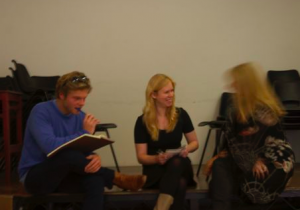 One of the many reasons why professional actors and drama school applicants come to Audition Doctor is Shakespeare. Harry Mount wrote in the Telegraph of the ofttimes default tendency to “treat Shakespeare with too much reverence, as an English literature exam question…” Shakespeare’s plays have become more associated with monotonous readings in English lessons at school than where he intended them to be – acted out on stage.
Mount went onto explain that Shakespeare’s unquestionable place in British culture has meant that “he has rightly become a mainstay of the academic world. [However,] that shouldn’t mean he should be confined to the classroom and the lecture hall. Shakespeare didn’t write for academics – or for the well-heeled, early 21st century theatre-going middle classes. He wrote for the rough and ready rank and file of Elizabethan London.”
Audition Doctor sessions don’t encourage the untouchable and venerational approach to Shakespeare. Instead, the Elizabethan language is tackled just as a contemporary speech would be.
This means that students at Audition Doctor avoid what Nick Hytner called “over-colouring”. He explained in the Guardian of the “overt musical poeticise which was very much what people wanted 30 or 40 years ago” going out of fashion.
“I believe that that poetic grace can come through and should come through, and we work on it, but it relies most importantly on people speaking it as if its how they think. If that happens, it’s comprehensible.”
Mount even cited Richard E. Grant’s Hamlet soliloquy in Withnail and I as an example of how Shakespeare’s language can be seamlessly and comprehensibly woven into modern day speech.
“The insertion of a Tudor speech into a film about late Sixties London seems entirely unstagey because Grant acts it so convincingly. He understands what the words mean, and communicates that understanding so expertly that the audience doesn’t have to strain to understand it.”
Hytner has admitted of Shakespeare productions that “The first five minutes is always tricky. But I think by 15 minutes in, most people have tuned in.” Audition Doctor’s indispensability to actors lies in the fact that students end up commanding the language so fully and using the writing to their utmost advantage that the audience is immediately drawn in. Initial auditions, especially for drama schools, are rarely longer than 15 minutes. There simply isn’t the luxury of time to allow the panel to ease into your performance.
The volume of drama school auditions mean that each candidate is given a very limited time slot. Audition Doctor sessions have given students the assurance that this isn’t wasted. The few minutes that you are given to impress your prospective future teachers can seem hugely intimidating.
Gemma Arterton recently spoke of how important her experience at drama school was in terms of launching her career.
“I didn’t come from a background where I knew anyone in the industry so I went to drama school and luckily here in the UK we have that opportunity that anyone from any background can apply to drama school. We have government funding to support students there so I auditioned…and then I got into RADA…I suppose it gives you a platform which is taken very seriously…and a lot of people come and see you when you’re there…I got an agent…but it was all thanks to drama school.”
Audition Doctor immeasurably improves your chances of reaching this platform and consequently, of forging a sustained career in the industry.

by Bel | Feb 18, 2015 | acting classes, acting classes london, audition classes, audition doctor, auditions, classes for acting, tilly blackwood
 Last Sunday Mark Rylance spoke on Desert Island Discs about how “acting is a mixture of reaching out to people, which I would call a kind of electric thing, you have to stir and engage their imagination at times and at other times you have to be more like a magnet and draw them towards you. It’s really about hiding and revealing.”
Professional as well as aspiring actors have found Audition Doctor to be vital in the quest for achieving an equilibrium between these two seemingly contradictory principles. Although difficult to achieve, its purpose is simple – as Shane Zaza (currently in Behind the Beautiful Forevers at the National) put it recently – to “say the words and make it seem real. Make it sound like it’s not part of the script and that what you are doing is the truth.” In other words, clarity of emotion and thought.
Many students come to Audition Doctor because of their fear of Shakespeare – initially speeches are seemingly opaque and incommunicable. Even Olivia Colman admitted a “sense of inadequacy” when it came to Shakespeare: “I find Shakespeare terrifying. When Simon Russell Beale does a speech I understand every word of it, but if I did the same speech people would be going ‘Huh? What?’”
It’s therefore gratifying to discover that Simon Russell Beale puts comprehensibility above all else. In an article in the Guardian this week, he said: “You can do what you like with [the text] – as long as you make coherent, emotional sense…I see absolutely no problem in throwing Shakespeare around”. The purpose of any play is to affect an audience, the reason why Shakespeare is still routinely performed is because the trials and experiences that the characters face are still recognisable to audiences today. Audition Doctor sessions make you realise that Shakespearean language is actually the actor’s greatest tool in “[making] these great literary dramas real and contemporary”.
In Audition Doctor sessions, nothing is immutable. Students realise session by session that Shakespeare speeches that initially started off being performed stiltedly and dispassionately cease being these untouchable museum pieces. Instead they breathe and come alive and fulfil their original intention of eliciting a real and true response from their audience.
The freedom to experiment that characterises Audition Doctor’s method of working reflects the attitudes of many established theatre practitioners. Deborah Warner encouraged actors and directors to “Do whatever you want … with the texts … You must cut to create new work.”
Rylance mentioned that “You must act exactly the same on stage as in front of the camera in terms of whether your emotions are truly felt, whether you are thinking things through and discovering things.” While there are variable technicalities that have to be obeyed when acting in different mediums, the authenticity of intention and feeling behind each line is a constant.
Mastering this takes an inordinate amount of learning and practice. There are places other than drama school, such as Audition Doctor, where this is achievable. However, many of Audition Doctor’s students are professional actors who have been to drama school and use Audition Doctor to continue to expand their abilities. Training at an accredited drama school is still viewed by those in the industry as the safest option.
In yesterday’s Guardian, Rebecca Atkinson-Lorde wrote: “The industry is competitive and, because of the cultural devaluation of vocational training for the majority of kids who want to work in theatre, the best way to build the skills and contacts you need is by training at a good drama school…” which is why Audition Doctor continues to be increasingly needed by drama school applicants and professionals alike.
by Bel | Feb 11, 2015 | acting classes, acting classes london, audition classes, audition doctor, auditions, classes for acting, tilly blackwood
 In today’s Guardian, Alan Rickman spoke of how his desire to act in Shakespeare plays had always been present: “You test yourself against great writing…What one’s aiming at is suitably impossible with great writing, which is to be absolutely disciplined and absolutely free at the same time. The two things have to work together.”
Both professional actors and drama school applicants have found that Audition Doctor has been critical in the process of striving for this quasi-impossible balancing act. Students come to Audition Doctor at different stages in their preparation. However, those who come well in advance unfailingly have the upper hand; picking speeches that will test an actor’s mettle and simultaneously exhibit intelligence and dexterity is perhaps one of the most fundamental aspects of the process. Inevitably, it is best to workshop different speeches with Tilly’s help as potential pitfalls and misunderstandings (especially with Shakespearean texts) can then be explained and evaluated.
Michael Grandage, who directed Felicity Jones in the past, said that she only ever accepted a part “because she has an innate understanding of the role – she never comes to the process not knowing what she’s got to do”. What follows, during the rehearsals, is a layering process, he says. “With each day that goes by, she finds more of the character and takes away what she doesn’t like. She is somebody who excavates a role very deeply and builds from inside out. It’s a fantastic thing to watch because you see, in front of your eyes, a character grow and grow.”
The layering process that Grandage speaks of is similar to what happens at Audition Doctor. With each session, the sculpting of the character becomes more defined so the human being that you have created is never a cursory sketch but a detailed portrait. The thorough work that is done on the internal and external emotional landscape of the character means that Audition Doctor students are always original and are never accused of being “too general” in their work.
Mark Rylance spoke in the Radio Times of how he prepared for his role of Thomas Cromwell in Wolf Hall: “I’ve watched lots of films preparing for this, and I was particularly struck by one of my favourite actors, Robert Mitchum, how his performances haven’t dated in the way that even perhaps more versatile actors, Brando and Dean and people of that era, have. I noticed how well he listens, how still he is, how present he seems. You’re drawn towards the screen – wondering what’s he thinking, what’s he going to do next. That’s always the best way to tell a story.”
Audition Doctor students value the sessions because they come to realise that they don’t have to “act” or “perform” to be truthful and have an effect. More often than not, the moments of authenticity and artistic ingenuity are achieved by simply being present – “simply” perhaps being an oxymoronic choice of word.
Students find Audition Doctor sessions indispensable yet challenging, but that’s as it should be. As Alan Rickman concluded: “I always think [of] the last image of The Tempest – when Caliban is held tight at the same moment that Ariel is let go and it seems to me that was Shakespeare writing about what it’s like to be a creative person – you have this impossible aim and whatever your horizon is you keep moving towards it and it relentlessly moves away from you.”

by Bel | Feb 4, 2015 | acting classes, acting classes london, audition classes, audition doctor, auditions, classes for acting, tilly blackwood
 Headlong’s Artistic Director, Jeremy Herrin, whose production of The Nether is in the West End, gave his advice on auditioning in this week’s Ideastap magazine:
“Choose a piece that suits you in a profound way: either you might plausibly be cast in the part or know you have a clear way of transmitting that character. Avoid speeches that are too obvious, i.e. try and avoid those 101 Audition pieces anthologies. The panel don’t want to sit though “I left no ring with her, what means this lady?” more than six times that morning. Why not try something contemporary? Start early and read widely.
This is why for those applying to drama school, most come early in the year for their Audition Doctor consultation sessions. Students who come later in the process sometimes underestimate the amount of preparation that is needed. Aside from picking the right speech, Herrin advises to “Study the whole play and get a three-dimensional idea of the part. Make sure you understand and, crucially, can pronounce every word you have to say. Get good help with rehearsing it, so you know how you’re coming across. Think about what the character wants, and how they counter any obstacles in their way. Where is this speech on that journey?”
Both professional actors and drama school candidates have found that Audition Doctor has been the “good help” that Herrin speaks of. Audition Doctor’s success lies in probing and extracting your unique perception of the character so that you deliver a performance that is wholly yours. However, some of those who have directed themselves prior to going to Audition Doctor have found that their intentions behind the text have not translated in the acting of it. This is why Audition Doctor has often proved to be crucial even for those who decide to come at the eleventh hour.
The character’s desires, obstacles and motivations within the speech are inevitably informed by the wider content of the play itself and its historical context. The decisions behind every beat is crucial and can have a drastic impact on how you play the role.
Maxine Peake’s interview in today’s Guardian illustrates this. Speaking of her portrayal of Hamlet at the Royal Exchange, she mentioned: “I was 28 when I did Ophelia at the West Yorkshire Playhouse with Christopher Eccleston. In a strange way she’s slightly more complicated than Hamlet. I thought she was slightly mad from the beginning because she’s in this oppressive regime and then she completely loses her grip on reality by the end of it. When I did it, it was all about her heartbreak. So I was blown away by what Sarah [Frankcom] and Katie West did in our production. I realised – maybe because it was a female director or because Polonius was Polonia – it’s because she’s lost a parent. In the production I did with Christopher Eccleston, it was all about Hamlet’s rejection that sent her mad, which I found difficult.”
Finding the right motivations that you believe in and can support textually is something that Audition Doctor concentrates on. However, the brilliant thing about Audition Doctor is that different avenues will be tested, worked on and analysed before discarded. This means that when you are redirected in the audition, there will be fewer surprises and you will be able to give the panel a host of equally believable alternative interpretations. The ability to to show this level of flexibility and artistic nuance is the reason why Audition Doctor sessions have proved so invaluable to professionals and drama school applicants alike.

by Bel | Jan 28, 2015 | acting classes, acting classes london, audition classes, audition doctor, auditions, classes for acting, tilly blackwood
 All freelancers speak of the importance of self-discipline – reserves of which have to be plentiful particularly during periods of unemployment. For actors, the continual need to exercise technical, creative and literal muscles requires an inordinate amount of practice and commitment. Professional and aspiring actors have found that Audition Doctor has been the place to practice either between or during jobs.
With practice inevitably comes failure. Helena Bonham Carter spoke of this recently when she said: “Allow yourself to make mistakes. You can be bad, you can act badly, it’s not going to kill anyone…I spent so much time thinking “I was crap in that” and I just made myself worse.” Audition Doctor sessions are in demand because actors have found that lessons are a practical way of avoiding useless negative thought and to simply become better through practice.
James McAvoy spoke in the Telegraph: “People seem to find the rehearsal room liberating, with the freedom to fail, I say… “Whereas I’m like no! I failed!” Many actors between jobs and those applying to drama school don’t have the luxury of experiencing the either liberating or restricting nature of the rehearsal room. Audition Doctor, however, does offer this. The freedom to be bad, fail and consequently progress is something that Tilly encourages.
Although Bonham Carter speaks of how it’s okay to act badly, obviously most actors can’t afford to experiment and fail on the job. Furthermore, her assertion that she learnt “just by doing it” is easier said than done. This is why Audition Doctor has become the space where actors can really be daring and innovative in the way they approach their work. It’s where they can be free to experiment and road-test decisions before an audition.
Ethan Hawke recently said that to be an actor “You need concentration, imagination and relaxation. I know it’s sounds corny but it’s what Stanislavsky said. I read it when I was 16 years old and I still think of it everyday.” Audition Doctor fosters all three requirements; the unpressurised yet focused environment that define the sessions mean that actors always find that they are pushed to the limits of their creativity. Audition Doctor sessions, like rehearsals, are sometimes difficult.
However, both Jamie Lloyd and James McAvoy “embrace this discomfort. “I hope that theatre is more than just coming along for a jolly nice night, something you do just before you go and have dinner,” says Lloyd. “I’ve been thinking about this quote from Nureyev, that expresses what I’ve been trying to articulate for the last five or six years,” says McAvoy. “It’s that people don’t come to see us dance, they come to see our fear. And they don’t come to see us act, they don’t come to even see the story, they come to see something dangerous.”
While Audition Doctor is a safe space, the work that comes out of the sessions is often challenging. However, it is this dangerous element that makes Audition Doctor students stand out and consequently land the role.
by Bel | Jan 21, 2015 | acting classes, acting classes london, audition classes, audition doctor, auditions, classes for acting
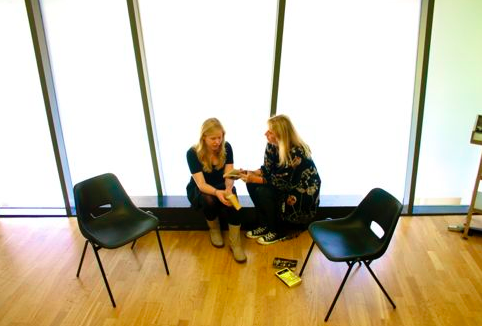
 When Rufus Sewell was interviewed by BAFTA, he cited the main reason why he went to drama school was because “[he] had no idea what you were supposed to do.”
He said: “I didn’t know any actors. The great thing about drama school was that, as well as three years of practice, there was someone there to tell me what to do next, as in who to audition for et cetera…”
Aside from this more practical view (that the mentors and contacts that drama schools offer are often the launchpad for students’ careers into the industry), drama schools are also places where risk and curiosity are encouraged.
Sewell went onto say: “We suffer, as human beings, from taking onboard other people’s descriptions of the world around us without questioning. I think it’s very good to be curious and I always think it’s good to reexamine not only the world but the things about you. In the end, I learnt at drama school by surrendering all my oddities, but also that the one thing I had was my oddities. By the time I found them and were in contact with them again, I fought for them very strongly. So I think the best thing you can do is retain what it is about yourself that makes you you because in the end that’s all you have to work with. Don’t give it away.”
Drama schools are sometimes accused of churning out self-conscious and homogenous actors, just as much as they are praised with fostering originality and supplying quality training. However, it is inarguable that there is a fundamental level of knowledge and technique that all actors must achieve; only when these are mastered can you bleed your own imagination and experience into a role to make it wholly original.
Professional actors and drama school applicants come to Audition Doctor precisely because Tilly tirelessly pushes her students to develop creativity as well as craft. Your idiosyncrasies are strengthened while bad habits are ironed out so auditions become a much less stressful process.
This week in Ideastap, Tamara Harvey who is directing Hello/Goodbye at the Hampstead Theatre, said: “In an audition there are lots of things the actor can’t control. You can’t control whether you match with someone I’ve already cast, for instance. But what I do look for is a willingness to play. Whenever I’m auditioning, I will always get the actor to read or perform more than once so I can see how they react to a note or a suggestion. It’s got far more to do with their willingness to take something in a new direction or try the unknown than it is about particular note.”
There is no typical Audition Doctor student, however, the one thing that they all share is a willingness to play. Audition Doctor sessions are about risk, daring to fail and always striving to surpass limits into the unknown. This is why Audition Doctor has become increasingly indispensable.

by Bel | Jan 14, 2015 | acting classes, acting classes london, audition classes, audition doctor, auditions, classes for acting, tilly blackwood
 Today’s interview with Frances Barber in the Guardian discussed the unnecessary obligation that actors sometimes feel to “act”. Barber spoke of how the text was compelling enough to sustain a performance and how any extraneous “acting” was unnecessary, particularly in the works of Shakespeare, David Mamet and Patrick Marber.
“All is required is the sense, it doesn’t require your embellishment. David Mamet has this rather po-faced attitude towards acting and he has this kind of strange theory that when you are in one of his plays, he hopes that you’re wondering whether you’re going to have fishcakes at the Ivy while you’re in an emotional scene. I’m not quite sure I subscribe to all of that but I think I kind of know where he’s coming from, which is don’t embellish what he, the writer, has given you…It’s anti Victoriana and anti showing off and being rather indulgent in having pyrotechnics in your performance which I really do subscribe to. I don’t like that I want to see an actor’s personality within the character but I don’t want to see an actor showing off because he’s a clever clogs and he can do all sorts of things to fascinate me. I don’t want that because I’ve come to see the play. Mamet has a very valid point and I bet Shakespeare would be on Mamet’s side. He’s given you everything, you don’t need to do more than that, you just need to say the words. When I played Goneril I didn’t have to [signal] “I’m the Wicked Witch now, look at this”, it’s in the words….You can do it in a myriad of ways but I don’t need to come on as the Wicked Stepmother with lightning and pirouette across the stage…because it’s all done in the writing and the rhythm.”
Professional actors and drama school candidates realise that Audition Doctor sessions always steer them away from pyrotechnics and embellishment and towards using the text as a means of authentically portraying a character. However, students find the requirement of “just [saying] the words” is often harder than it sounds because the desire to “act” often dominates the desire to pare down. This is why most students come to Audition Doctor at the beginning of the audition process so lessons can focus on building the character from the ground up, as opposed to focusing on unpicking the theatricalities that may have creeped in.
Coming to Audition Doctor at the start of the process is often useful in terms of picking speeches. As Barber’s interview shows, the speech you choose is hugely important. For drama school auditions especially, there is a fine line between showing ability and showing off. A perfect speech is one that shows off your abilities without you having to resort to showing off yourself.
Clive Owen recently said in the Independent that for him, the most important thing was the text – “The reality is that when as an actor you come across a piece of material that sets you alight and reminds you of why you do what you do, that’s the be-all and end-all.”
Coming to Audition Doctor at the start of your audition journey gives you time to find the right speech and really inhabit the character so that just saying the words is enough.

by Bel | Jan 7, 2015 | acting classes, acting classes london, audition classes, audition doctor, auditions, classes for acting, tilly blackwood
 When Eddie Redmayne was asked what advice he would give to those starting out in the acting profession, he emphasised the importance of “finding a sort of constancy and rhythm of your own because it’s a world in which you retain very little control. As an actor, everyone else is in charge so you need to find your own sense of control.” As with any freelance job, there can be unavoidable expanses of time between each job. Redmayne described the acting profession as “one of incredibly intense experiences followed by weird lulls.”
Audition Doctor is a where actors come to ensure that the weird lulls are put to good use – where technique and imagination are equally prioritised. It’s a place where professional actors and drama school candidates have found a sense of control. Most students eventually attend regular sessions because they find that the progress that results from experimentation and rehearsal at Audition Doctor is ostensible. The fallow periods become rewarding and students realise that they succeed in tackling language or emotional terrains they previously thought unreachable.
The actors who come to Audition Doctor are varied in terms of where and if they trained. However, whether or not they attended an accredited institution or not, what is undisputed is the fact that in a profession which is famous for its lack of stability, they recognise that it is integral to continually exercise their craft. Audition Doctor has become an alternative as well as a supplement to the conventional route of drama school.
This week in the Guardian, Emily Blunt said: “Drama school gives you a place to screw up and fuck up, and it gives you room for self-discovery and technique. I’ve also seen how it crushes people’s natural ability, and how it creates a space where you just overthink everything and become this neurotic performer. I’ve seen it both ways with friends, so I don’t know how it would have affected me. I just tried to sponge it up, to learn from everybody I was around.”
Blunt learnt on the job which was effectively an apprenticeship. However, for many aspiring actors, jobs are hard to come by without training. Consequently there aren’t many situations where you have the privilege of learning from active professionals. This is something that Audition Doctor does provide.
Aside from technique, students find that coming to Audition Doctor is also about exercising other qualities. Blunt spoke of how acting was “the ultimate expression of empathy” and the importance of curiosity – both qualities which are needed when exploring different characters.
Jake Gyllenhaal said something similar when he acknowledged that the profession could rightly at times be described as “an incredibly immature, selfish profession, but on the flip side of that, it helps you practice empathy. When you do your research, you see what real people are doing in the world.”

by Bel | Dec 30, 2014 | acting classes, acting classes london, audition classes, audition doctor, auditions, tilly blackwood
 Ralph Fiennes was recently interviewed and asked if he had a set way of approaching characters. He said: “I don’t have a specific method that there’s a label for, I think different projects require a different way in, and again depending on the director, often they will spark off a way to imagine or feel or think your way into a role.”
For all acting jobs, there is clearly a need to demonstrate in the audition that you have the emotional perception and intellectual precocity to somehow find a way “in” to a role. For professional actors and drama school applicants, Audition Doctor has been an invaluable intermediary stepping stone – giving students the benefits of a director’s guidance prior to an audition. Much like Fiennes’ outlook, Audition Doctor’s success lies in having no proscriptive method for her students. Each character is simultaneously dissected and constructed in a unique approach that best suits the individual.
However, what all Audition Doctor’s students share is the graft that both Tilly, and most importantly, the student commit to throughout the sessions. This brings to mind Philip Seymour Hoffman’s opinions on preparing for a part:
“I think that the amount of concentration — sometimes the amount of personal exploration — it takes to do something well, can be not pleasant … like hard work is. That doesn’t mean that you don’t want to do it, or that you don’t love it, or that it’s not ultimately satisfying… There’s always something about that job that’s exhausting, and that’s what’s exhausting about acting, is the level concentration over very long period of time.
If there’s something emotional about what you’re doing that day, you’re carrying that emotion on one level or another for a long period of time … it can be burdensome. But it’s part of the work, and you’re trying to create something artful out of it…You’re there to take what you know and the experiences and behaviour and emotional life of yourself and others and try to make something artful out of it.”
Creating something artful is hugely helped if you pick the right speech – something that Audition Doctor is vociferous about. However, Ralph Fiennes recently spoke about the difficulties that actors perversely felt when the script was too perfect: “Sometimes if a script is really good it’s easy to learn the lines and have fun but then you forget where they come from and who the person is who’s saying them.”
Audition Doctor never lets students run away with or hide behind the language. Fiennes went onto say: “I think the interior life of the character is very important, how they think, how they feel, what’s going on inside them.” The focus on the character is so in-depth and sustained at Audition Doctor that students always use the language to their advantage; as a weapon to communicate emotions more effectually with the spectator.
Fiennes went onto say that his greatest challenge was “about not judging. What I like is finding the totality of a person…it’s about the humanity and the horror of them.” Characters created at Audition Doctor are never one-dimensional. The work put in in the sessions means that students always end up forming an authentic character, in other words, creating a piece of art.
by Bel | Dec 24, 2014 | acting classes, acting classes london, audition classes, audition doctor, auditions, classes for acting, tilly blackwood
 In the second part of his interview with BAFTA, David Morrissey spoke of the process of preparing for a role and the diverse exigencies that different roles had on actors. He spoke of time being a crucial factor in determining how he prepared. He mentioned that if he was given the luxury of time, he’d unleash his “inner geek” and would do in-depth research.
“I have to find the idiosyncrasies as a character. Sometimes there’s physical work, sometimes there’s accent work as well. You have to do all of that before you walk onto the set or stage because you want to be forgetting about all of that when you’re doing the job itself.”
Actors and drama school applicants who come to Audition Doctor usually attend bi-weekly sessions if they have the advantage of time prior to an audition. Regular sessions allow you to incrementally and organically build authentic characters. Idiosyncrasies are not merely tacked on to seemingly seek attention from the panel, but genuine singularities of the character are unearthed that can be textually supported. This is due to the forensic research that is undertaken at Audition Doctor.
Sessions focus not only on the psychological exploration of the character but also weave historical context into your performance.
As Morrissey advised: “You have to put yourself in their head. If you go further back into Tudor times, you have [to be aware of] strange things like life expectancy have a weight on you that you have to carry. The comfort of life that we have, you have to make sure that your characters don’t have that surety. Also the expectation of life in the sense that if you say the wrong thing to the wrong person then it’s your head on the block literally. So that fear that you’re working in, you have to make sure that is inside the [process of your] decision making.”
It is this commitment to creativity and unswerving drive to drill deeper into the core of human psyche that has made Audition Doctor indispensable to actors. It is also these particular qualities that differentiate the practitioner from the artist.
Lisa Dwan – who recently performed in Beckett’s Not, I – wrote in the Guardian about her recently departed friend and mentor, Billie Whitelaw:
“Billie lifted the lid on all of [Beckett’s] well-worn notes, especially his instruction Don’t Act: “No colour”. She was adamant not to let me emulate her performance or veer towards a surface “Beckett-style” reproduction, but wanted instead for the work to connect deep within the performer. She explained that Beckett dealt with such truths that he had no room for an actor’s craft. He did want emotion, only he wanted all of it – the real stuff, the guts – not some polished fool’s gold…She taught me that truth has a sound, a timbre.”
Audition Doctor sessions are sometimes difficult and demanding – but every single student leaves knowing that no pathway, however difficult, has been avoided in the pursuit of the truth, of which there may be many. The difference is that Tilly encourages the unusual and the ambitious – “the real stuff, the guts” – which means that even just one session at Audition Doctor usually changes not only the way you approach a character, but the way you approach the wider craft of acting itself.