by Bel | Sep 25, 2014 | acting classes, acting classes london, audition classes, audition doctor, auditions, tilly blackwood
 Mike Bartlett’s newest play, King Charles III, is written in Shakespearean verse. He described it in The Guardian as “an epic royal family drama, dealing with power and national constitution, [this] was the content, and therefore the form had surely to be Shakespearean.”
The fact that contemporary playwrights are using Elizabethan form puts paid to the idea that iambic pentameter is confined solely to the 17th century. In Bartlett’s search for the right actor to play Charles, he said: “ I was keen we found an actor to play Charles who knew Shakespeare – who could take on this part like any role – seriously, and follow the clues in the text, rather than perform an impression or parody of Charles the man.”
This is why both professional actors and drama school applicants come to Audition Doctor; sessions with Tilly always concentrate on unearthing clues that yield genuine yet original performances. The approach is identical for both Shakespeare texts and modern plays as the actor’s fundamental goal is one and the same – to tell the story.
Bartlett said: “The terms the verse and the play worked on were sincere and meaningful. It wasn’t a postmodern take on Shakespeare, it wasn’t a parody or a pastiche – it was a play, telling a story the audience should care about.” However, as many drama school applicants know, performing the often unwieldy and demanding language of Elizabethan playwrights in a sincere and meaningful way is difficult. Audition Doctor sessions takes away all the pressure of having to approach often obscure and obsolete language alone.
Nicholas Cage stated in The Times: “I want [my acting] to look truthful. I don’t want it to seem like I’m acting, I don’t want it to look fake. Even if I’m doing a movie where I’m in some sort of supernatural situation, I’m still going to approach it with the same commitment and quest for authenticity And that may look ridiculous. But, to me, what’s important is that I didn’t fake it.”
Shakespeare, like most things, becomes less intimidating and more enjoyable the more you practice, which is why students make regular appointments at Audition Doctor. It gives you the freedom to organically build a character that is rooted in the authenticity that Cage strives for. This means by the time it comes to your audition, performing your monologues doesn’t seem so daunting and every Audition Doctor student enters the room confident in their interpretation. Consequently, many feel at ease with being redirected and actually enjoy their auditions.
Audition Doctor sessions also give you the chance to experiment with how to perform Shakespeare. Bartlett commented: “Peter O’Toole said about speaking Shakespeare that while the convention is to match the thought with the word, he found it works much better when the thought is just behind the word. The language leads, and we only have time to think in its wake.”
There are a myriad different ways to approach any given text and to do so under professional guidance at Audition Doctor means you have the freedom to push the boundaries of your own performance whilst never compromising on authenticity.

by Bel | Sep 18, 2014 | acting classes, acting classes london, audition classes, audition doctor, auditions, classes for acting, help with auditions, tilly blackwood, Training
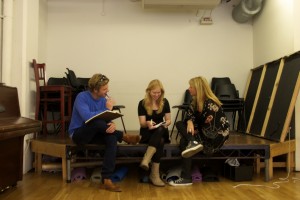 Speaking of the rehearsal process and the nature of being part of a company, Simon Russell Beale commented: “I personally would be unable to develop a part by myself at home…I need the stimulation of other people.”
One of the reasons for Audition Doctor’s popularity is the need for professional actors and drama school applicants to have a professional sounding board when creating a character. Especially as the drama school audition process is protracted one, rehearsing monologues countless times at home is unsurprisingly not conducive to preserving the vitality and originality that perhaps you had at the beginning.
In an interview on The National Theatre’s website, Nick Hytner said: “Good actors can’t learn their lines unless they know why they’re saying them and you can take an infinite amount of time finding out why you have to say the lines that are written for you. The best acting gives the impression of being spontaneous. In order to be spontaneous every night, you have to feel like the words you say are the only response to the situation you find yourself in…Rehearsals are the process of discovering those reasons.”
Audition Doctor sessions are the closest thing drama school applicants will have to rehearsals and the final recalls that students achieve are testament to the uninhibited freedom of expression that Tilly instils each of her students with. This quality is also why Audition Doctor is increasingly regarded as a necessity for professional actors preparing for jobs.
Judi Dench spoke out this week against the financial constraints placed on actors without significant private funding to pay for conservatoire training. She mentioned: “Anyone who’s in the theatre gets letters countless times a week asking for help to get through drama school. You can do so much, but you can’t do an endless thing. It is very expensive.”
The Guardian commented: “She accepts that talented aspiring actors can make it without going to drama school. “But it’s a hard and rocky road,” she added.”
The collapse of the repertory system – which Dench describes as “where you went to learn and make your mistakes and watch people who knew how to do it” – has meant that drama schools have become increasingly important for actors learning their craft.
Despite the increase in fees, the competition is no less fierce. The National Theatre website states: “Acting requires a wide range of skills, vocal, physical, imaginative, expressive, intellectual, intuitive, and work can demand different dialects, languages, accents, vocal control or body language, improvisation, observation and emulation, mime and often dancing or stage combat. A stage actor will often be required to research around a character or a period of history. In an ever changing world it is a continually evolving profession”. Students understand that the industry is a demanding one and that the skills taught at drama school are essential to survival and longevity as an artist.
Speaking of her imminent return to the London stage, Emma Thompson said that she was suffering from nerves and nausea but that she was adhering to the advice of the late choreographer Agnes de Mille: “You have to keep flinging yourself, leaping into the dark.” Whether you are preparing for a professional role or a drama school audition, Audition Doctor prepares you for that leap and makes it far less terrifying.
by Bel | Sep 11, 2014 | acting classes, acting classes london, audition classes, audition doctor, auditions, classes for acting, tilly blackwood
When asked the question “Why rehearse?”, Simon Russell Beale replied: “Very often we’re dealing with works of great complexity and great depth and I think its courteous to spend that amount of time figuring out what Shakespeare or Shaw wanted to do and that applies to new plays too. It’s a more complicated procedure than most people probably think. It’s not just a question of where you stand and getting the lines out in the right order. It has to be developed in a much more organic way than that and that’s what that time is spent doing. [An actor’s job] is to find the emotional and intellectual path through our various characters and our relationships and that actually requires quite a lot of delicate piecemeal work which takes time.”
The influx of students at Audition Doctor begins earlier every year which reflects both the conscientious nature of drama school applicants and the highly competitive nature of getting a place. Those who get further on in the process are often those who have taken advantage of all the chances offered to better their craft. This inevitably takes continual graft over a period of time and Audition Doctor is one such opportunity. It is rare in the sense that it is totally focused on you. Schemes such as those offered on Ideastap are almost always group lessons. They are undoubtedly brilliant, however, places are strictly limited and usually one-off which makes progress hard to gauge. Consistent lessons at Audition Doctor are an investment because students are able to see a clear upward trajectory in their development as an actor. The delicate piecemeal work that Russell Beale speaks of is difficult to do alone and Audition Doctor sessions give you the freedom to explore difficult texts with professional help.
The RSC’s Casting Director, Hannah Miller, was talking recently of giving 24 young and emerging actors the chance to learn the text, voice and movement exercises used by the RSC when approaching classical texts. Similar to Audition Doctor, she mentioned that the sessions were “not just teaching techniques for classical work. It’s about working with the words that have been written. The writer has done everything for a reason. You need to observe that, take clues, ask questions and deconstruct the text to find out what it means to you, given your understanding of that character. That is the just the same for a naturalistic piece of work written two years ago as it is for a classical text.”
The reason why many students come to Audition Doctor is due to the perceived difficulties they face when approaching a Shakespeare text – an unavoidable necessity for drama school auditions. Miller went onto say: “Of course, there are different challenges with classical texts. We might not actually know what those words mean. It is alien to the way that we speak and understand language.” Audition Doctor sessions instills confidence and removes the fear from Shakespeare which is invaluable in the actual audition when being redirected and asked to experiment with the language.
Miller stated that the RSC was looking for individuals “with an open mind. With creativity, truth in their performances and technique” and it is this that Audition Doctor equips each one of her students with prior to auditions.

by Bel | Sep 4, 2014 | acting classes, acting classes london, audition classes, audition doctor, auditions, classes for acting

In an interview about stage actors, Nicholas Hytner talked of the specific demands that theatre required of its practitioners: “Everyone thinks they know what actors do, they try truthfully to be other people or maybe they reveal parts of themselves through the act of pretending to be other people. But stage actors have particular demands made on them. They have to truthfully to include maybe a thousand people into a conversation and very often they have to make inevitable, natural and truthful texts of great complexity and beauty that are maybe five hundred years old. That requires vocal skills, physical skills but also mental and emotional skills.”
The advent of September means applications to drama school will soon be open. Although it may seem early to begin picking and rehearsing speeches, the oft-repeated advice that professional actors give to those starting out is to prepare.
Most students who come to Audition Doctor to prepare for auditions begin early on in the process. Sometimes applicants have a misplaced belief that leaving practicing their audition monologues till much later means their performance at the audition will be fresh and original.
Roger Allam countered this belief in an interview for the National Theatre: “I think repetition is one of the most important things about acting. I haven’t got much time for people who say “Oh it’s so boring doing these runs of plays” because in a sense, that’s what acting is. The French word for rehearsal is “répétition”. You have to repeat it to learn it and to learn how to do it.”
Hytner went onto say: “To make it feel as if these are the only things that can be said, thought or felt in the situation that has been portrayed on the stage and to make that felt over a span of two or three hours is actually a very very different job from simply, as it were, transmitting a realistic copy of human behaviour to a camera that may only be two or three feet away from you, making very few physical demands of you.”
A drama school audition is effectively a theatre performance. The reason why so many students come to Audition Doctor is that they know that they only have about 3 minutes to convey that they not only have the ability to truthfully embody the life and experience of another person, but also sustain it for the length of a play.
Aside from focusing on the emotional side of the character, Audition Doctor also ensures that students rid themselves of any physical awkwardness. Initially, students often don’t know where or how to stand, what to do with their hands and this can negatively affect the way a speech is performed.
Audition Doctor makes sure that you enter the audition room confident and ready. Hannah Miller, Casting Director at the RSC, said in an Ideastap interview: “You’re not gatecrashing an audition – you’ve been invited and have every right to be there, But it’s also up to you to do yourself justice. Do everything in your power to make sure you have no regrets at the end of that meeting.” Coming to Audition Doctor does precisely that.

by Bel | Sep 2, 2014 | acting classes, acting classes london, audition classes, audition doctor, auditions, classes for acting, tilly blackwood
Both Judi Dench and Helen McCrory have recently professed the importance of the continuation of training outside the confines of drama school.
In her column in The Stage, Susan Elkin wrote: “Judi Dench told Patsy Rodenburg, who repeated it to me en passant, that when she was a young actor you could sit in digs at breakfast with other older cast members who would casually pass on advice such as: “You know, if you paused for slightly longer after that line you’d get a bigger laugh”. Now, Dench had trained at Central but here she was humbly honing her craft…”
McCrory, in an interview at the National Theatre, in turn spoke of how her early experience at the National was an extension of her drama school education: “That was my training for the next four years”. Appearing in The Seagull alongside Judi Dench was integral in her progression as an actress: “That’s what I’ve learned from watching Judi Dench all those years ago – she asked questions.”
Elkin went onto suggest that apprenticeships in theatre, currently offered mostly to those working backstage, should extend to actors: “Many a graduating actor would benefit from, say, a couple of years with a company. During that period the actor would see the production of several plays, gaining hands-on, on-the-spot experience of professional theatre with plenty of exposure to more experienced people.”
In the same week, Emilia Fox described going to drama school as an “insurance policy”. However, it’s worthy to note that Elkin is advocating “a formal mentoring structure, a development, perhaps, of what used to happen in the good old days of rep theatre” for actors who have received professional training. Even those who have had access to guidance from drama schools find it hard to avoid “the usual agent-at-any-price-regardless-of-quality scramble”. It appears evident that even those who have attended the best drama schools are not inoculated against the difficulties of the profession.
While apprenticeships such as the one Elkin advocates have yet to turn mainstream, drama school applicants, recent graduates and professional actors have been attending Audition Doctor as a way of broadening their abilities and seeking advice. Audition Doctor has proved especially popular with freshly graduated drama school students who book Audition Doctor sessions to maintain momentum and originality between their first professional auditions.
Helen McCrory’s comment on the importance of asking questions is what Audition Doctor is all about; not just questioning the text and artistic choices, but also having Tilly available on-hand to give experienced and unbiased advice.

by Bel | Jul 31, 2014 | acting classes, acting classes london, audition classes, audition doctor, auditions, tilly blackwood

In the same week that Maggie Gyllenhaal claimed that the UK was the place to live if you wanted to forge a career in the acting profession, The Stage devoted an article to the trend of American actors such as Gillian Anderson and Kathleen Turner who choose to perform on the London stage.
Matthew Hemley of The Stage wrote that it was “a mark of the quality of work on offer here that US actors want to work here. They’re not coming here because jobs are thin on the ground in the US. They’re coming here because of what we offer by way of quality dramas.”
Aside from British television, British theatre has also been receiving positive press with a comprehensive National Theatre report finding that “almost twice as many people visit the theatre every year in London as watch Premier League football.”
However, no matter how much the industry thrives, even its most successful practitioners are faced with difficulties. Even Gillian Anderson recently said that “90% of acting life is a disappointment in one way or another.”
Kenneth Branagh’s advice to people starting out in the acting profession was to “practice practice practice….it’s possible to hone whatever one has to the finest and sharpest degree and part of that is to watch those who are very very good at it…Be resourceful, don’t be bored, don’t be self-pitying, don’t think too much, just do.”
People who come to Audition Doctor find that sessions greatly minimise the possibility of disappointment at auditions by virtue of the fact the sessions are essentially practice. The focus is much more on exploring through doing than through detached textual analysis.
Students find that the more they come to Audition Doctor, the less inhibited and self-conscious they are at drama school auditions. The ability to uncover aspects of their character organically is only possible through a desire to explore their own vulnerability. This is something that Audition Doctor fosters and why the success rate of students getting into drama school is so consistently high.
by Bel | Jul 24, 2014 | acting classes, acting classes london, audition classes, audition doctor, auditions, tilly blackwood
 A couple of years ago, the Guardian published an article entitled “How to act: stage stars share their acting tips“. Along with “preparation, preparation, preparation”, the most common piece of advice was “listen”.
Actors often cite this ability as an absolute prerequisite when playing a scene. Dominic West recently mentioned: “People who I’ve most enjoyed working with are people who are open, who listen and who are flexible…if you go into a scene knowing how things are going to end up, chances are it’s not going to be a very interesting scene”.
People applying to drama school may understandably feel like this piece of advice is less applicable when performing their monologues in front of an audition panel. Sometimes drama schools provide an existing pupil to stand in place of the other character in your scene, but they will never react to your performance and are there more to help with eye line than anything else.
Furthermore, inevitably you will know how “things are going to end up” in your performance at an audition. Decisions based on the text will have been made and the panel will expect you to intelligently justify why you chose to present that particular interpretation.
Although there may be no other actor to listen or react to, the spirit of being open to suggestion is key to getting a recall. In a drama school audition, the listening applies to responding to the panel’s direction; hearing their notes and immediately adapting your performance to show that it isn’t set in stone and that you are able to play conflicting interpretations truthfully.
The panel aren’t looking for a polished performance, they are looking for students who are willing to fail in the pursuit of a better and more honest portrayal. The reason why drama schools graduates often have higher employment rates than those who haven’t been is because they have been allowed to experiment and fail intelligently.
James McAvoy said: “Drama schools are a great idea, I really do believe that. It’s three years where you’re in an environment where you are safe, your vulnerability is protected. No where in the professional world will you manage to get twenty gigs in three years playing all these different characters. You’re there to fail.”
This is why students return time and time again to Audition Doctor. The focus is not on creating a shiny, unchangeable performance, but the joy of unravelling a human being through trial and error.
When interviewed by BAFTA, Benedict Cumberbatch said: “You can never perfect what we do, I’ve never met anyone who goes “that’s perfection”….this goes for all art forms, the point is that perfection is unachievable. It’s that constant pursuit of the unobtainable which is kind of magic really and it’s that Beckett thing, fail again and fail better” which is essentially the unwritten ethos of Audition Doctor.
by Bel | Jul 17, 2014 | acting classes, acting classes london, audition classes, audition doctor, auditions, tilly blackwood
In the Guardian last month, Sylvestra Le Touzel spoke of how many actresses felt shortchanged by Shakespeare. She spoke in light of her experience playing Lady Percy in Henry IV: “Inhabiting Shakespeare’s women can be frustrating, not because he lacked insight into the female condition but because he didn’t give us enough space in which to play. “Have you ever felt that one of your scenes is missing?” Elizabeth Bell once asked me as she adjusted Gertrude’s lipstick, rose from her chair and exited with resignation to meet Hamlet in her closet.”
The advice most frequently dispensed by Audition Doctor to drama school applicants is the imperative of finding the best speech for you. The speech is the medium through which you will be judged first and foremost. For women, the range of speeches to choose from is narrower, however, the way a speech is interpreted has no limitation.
Le Touzel went onto comment on how “Many years later, while working on one of [Lady Percy’s] speeches with a drama student, we came to a section where the pentameter has an unexpected rhythm. I’d skipped over it 20 years before, but working on it again we found the underlying beat of a drum woven into the sentence structure. You can work on a speech for years and still find new insights.”
This week, Carrie Cracknell gave an insight into the National Theatre’s rehearsal process of Medea which incorporates dance into the production. Choreographer Lucy Guerin mentioned: “Actors need a lot of background on what they’re expressing and why. Carrie does these sessions called intentions, where everyone sits down and goes through the play line by line to figure out each character’s place.”
Audition Doctor sessions are not at all dissimilar; sessions are spent discussing motive and unpicking the text line by line. Such commitment to detail roots the performance in truth. Consequently, when questioned by panels as to why a particular decision was made, Audition Doctor students are always clear about the psychology behind every choice.
However, the thing that marks Audition Doctor’s students out is their awareness of how many different ways a character can be played. Redirection during recalls is common and due to the experimental nature of Audition Doctor sessions, students find that they are able to play many, and often opposite, intentions truthfully.
Cracknell said: “I do think we live in a culture of liking to know where we’re being led,” she says. “I would much rather be drawn into a work, and asked lots of difficult questions, than be taken on a well-worn story where I know what the outcome will be.”
Audition Doctor sessions are characterised by the refusal to go down the well-trodden path of the easiest option. Drama schools are looking for those who are prepared to be bold and ask difficult questions. It’s what Audition Doctor prepares each of her students to be.
by Bel | Jul 10, 2014 | acting classes, acting classes london, audition classes, audition doctor, auditions, tilly blackwood
This week on BBC Radio 4 Today, Paul Roseby, Head of NYT, reiterated his stance on drama school training. He refuted the belief that you could teach someone to act and deplored many drama school graduates as being “over moulded and over trained”. He asserted that “the best way is to learn in front of an audience and garner that instinct”.
“I hear it a lot – people that have from drama schools have a certain label attached to them, a certain mould…When you’re auditioning for a cornflake commercial, nobody says ‘What degree do you have and where have you trained?’ It’s about you in the room, in the moment. So whatever you have done beforehand is your deal and nobody else’s. All you have to do is sell.”
Roseby’s views, alongside Christopher Eccleston’s recent recounting of how despite being well cast at his Central School of Speech and Drama School final year show case, he didn’t get an agent for 3 years, may understandably cause possible students to think twice before applying to drama school.
While there is evidently truth in Roseby’s comments, schemes such as his NYT Rep Company which “offer free, practical, industry-based training over eight months to 12 talented members” are rare and competition is even more fierce than that experienced at drama school auditions.
Furthermore, the fact that NYT offers such a programme shows their acknowledgement of the importance of training and their ethos of “learning by doing it, not theorising” is that of the leading conservatoires. Additionally, in response to suggestions and changes in the industry, drama schools have made concerted efforts to tailor courses to better equip graduates for the realities of the profession. Sessions on how to form your own theatre company and advice on budgeting are already available in many schools.
If you aren’t one of the few who get onto schemes such as NYT, access to professional direction and advice can be hard to come by. Audition Doctor is one of the few places where both are given. However, Tilly still unfailingly repeats her belief to all her students that drama school training is essential.
Drama schools give you access to working actors, mentors, guidance and contacts. Audition Doctor’s success rate is high. However, the places that are gained as a result of the sessions are borne of a mutual commitment to both experimentation and graft. Although Roseby believes that one cannot learn how to act, of Audition Doctor’s students who do get into drama school, it is most frequently those who have worked the hardest.
by Bel | Jul 3, 2014 | acting classes, acting classes london, audition classes, audition doctor, auditions, tilly blackwood
In her Q&A for the Guardian this week, Kathleen Turner cited Romancing the Stone as her favourite film because “I really like how Joan Wilder changes. Change is what attracts me to a character.”
At drama school auditions, candidates are often questioned on their character’s “emotional arc”. ie. The inner journey or change that the character experiences throughout the speech. The panel aren’t just looking for a change within the speech itself, but also the ability to experiment with a variety of emotional journeys. Versatility and being open to changing the interpretation you entered the audition room with is, in some ways, more important than the performance itself. It demonstrates the knowledge that the text is a catalyst for diverse portrayals and infinite possibilities.
Theatre, with what Kathleen Turner deems its “all consuming eight shows a week” and likens to “being an Olymplic athlete in training”, is where actors can truly explore their range. The live nature of theatre means that no two shows can be exactly the same and why many actors realise they can only be true craftsmen if they are able to act on stage.
Richard Armitage, in this week’s Telegraph spoke of his return to the stage in The Crucible after 13 years of concentrating on film and television as significant: “It’s interesting coming back now and getting into a rehearsal room and going: ‘This is why I did it. I’d forgotten.’ I’m having a really amazing epiphany doing this, and I think I’ll be a different actor when I come out of it.”
This is why drama school panels and Audition Doctor consistently urge candidates to go and see as much theatre as possible. Not only do you often see actors going beyond what you previously thought possible, but you also have to understand what it is that excites you as a member of the audience.
Kathleen Turner claimed: “I definitely go to the theatre more than film, because as much as I enjoy some films, there’s nothing like the participation that you feel sitting in an audience at a live performance. It’s absolutely magic. You sit closer to a complete stranger than you would in your own homeland; if the play is compelling as the actors good, you start to breathe together. You hold your breath together. You laugh together. You can come become something greater than just yourself.”
Audition Doctor sessions are about creating an arresting yet truthful character that makes the audition panel sit up and notice that you are capable of change, and that you are able to honestly be something other than yourself.